Sunday, October 17, 2010

Sunday, October 10, 2010
Bugle Boys of the Missouri
Bugle Boys of the Missouri River
This Time of year I love to travel to the Slippery Ann Elk Viewing Area north of Lewistown, Montana. It’s about an hours north of town on Hwy. 191. I’d call it a scenic drive, passing various ranches, antelope, deer and maybe a coyote or two along the way.
Once we crossed the James Kipp Bridge, we took a right on a gravel road for 5 miles into the viewing area. Slippery Ann Elk Viewing Area is part of the Charles M. Russell National Refuge. In recent years records show that nearly 500 elk visit the area in September. Numbers remain high through early October, and begin to thin out as harems break up and the bulls begin to feed once again to store up reserves for the winter ahead.

As we approached the Elk Viewing Area, we began hearing the bugling bulls, a sound that is music to my soul. We drove another mile down the road past several vehicles to a spot elk within 30 to 50 yards off the road. The viewing area is about 2 miles long and backs up to the Missouri River; viewers are not allowed to leave the road.


As mating season winds down, the elk separate in their groups with the cows, calves, and spike bulls hanging together. The bigger bulls go off in their own direction till next mating season.

In the spring, elk feed on the new grasses after a long winter of eating dry grass and shrubs. In Montana calves are born between May 21st and June 12th. Twins are very rare. Calves are tan colored and spotted, so they blend in with their surroundings. The calves give off very little scent making it difficult for predators to detect them.
As dark approached, we finished our picnic dinner and sat back to listen to the bugling blasts and blunders of the bulls, as well as cow squeals for well beyond an hour, a symphony of nature at its best.

It would have been fun to stay all night, but we politely packed up our equipment and ourselves up and drove back to the Yogo Inn, an excellent base camp for our adventures and the best Sunday Brunch I have had in awhile.
Till Next time, fun travels and tight linesJ
-ZZ Troutski and Road Trekin Adventures

Friday, May 14, 2010
A Drive thru The National Bison Range
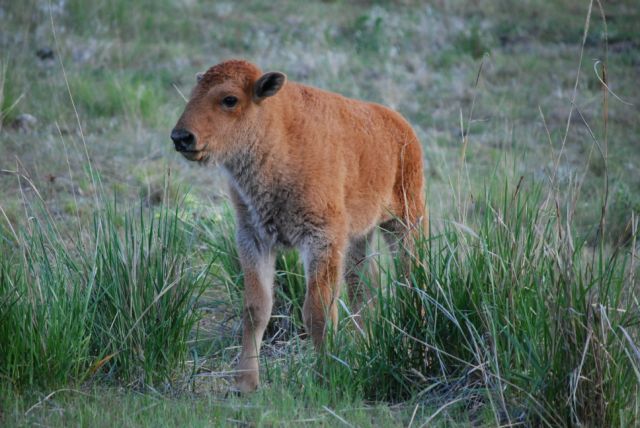


The history of the bison, or buffalo, in the Flathead Valley began in about 1873 when Walking Coyote, a Pend d' Oreille Indian, returned from Blackfeet Country on the plains with five orphaned calves. When he had about 13 buffalo, he sold them to two ranchers, Michael Pablo and Charles Allard. At that time, of the 30 to 70 million bison that once roamed the plains, less than 100 remained in the wild and there were fewer than 1,000 left. The Pablo/Allard herd had become the largest herd in existence. Allard's heirs sold his portion of the herd to Charles Conrad in Kalispell and animals from the Conrad herd formed the nucleus of the Bison Range stock.
As the valley became settled, Pablo realized that his large herd of free-roaming buffalo would not be very welcome, and he attempted to sell them to the United States Government. When he received little response, he sold the herd to Canada. The sale of this last, large herd out of the country produced a huge public outcry which led to the formation of the American Bison Society. Through the efforts of William Hornaday of the Smithsonian Institution, President Theodore Roosevelt and congress were persuaded to set aside lands for the preservation of the American bison. Three reserves were established between 1907 and 1909 to save bison from extinction.
The National Bison Range was one of these, and was established in 1908. Today bison are no longer in danger of extinction and there are more than 140,000 in North America. A large percentage of these are in private herds.
Currently, some 350 to 500 bison roam the 18,500 acres of the Bison Range, which is a part of the National Wildlife Refuge System. The Range is made up primarily of native Palouse prairie grasslands, but also includes mountain forest, wetlands and river bottom woodlands. In addition to bison, these diverse habitats provide a home for some 50 different animals and over 200 bird species.


THE BUFFALO CHIP
Or When the Chips are Down!!!